EN
EN
 CN
CN EN
EN AR
AR BG
BG HR
HR CS
CS DA
DA NL
NL FI
FI FR
FR DE
DE EL
EL HI
HI IT
IT JA
JA KO
KO NO
NO PL
PL PT
PT RO
RO RU
RU ES
ES SV
SV IW
IW ID
ID LV
LV LT
LT SR
SR SK
SK SL
SL UK
UK VI
VI ET
ET HU
HU TH
TH TR
TR FA
FA MS
MS BE
BE HY
HY AZ
AZ EU
EU KA
KA MN
MN MY
MY KK
KK TG
TG

Water is something we do not pay much attention to, yet not every water appears as clean as it might seem to be. Impurities can be in our taps and we still do not notice it because of minute particles or even invisible chemicals. This may be a source of concern to families particularly with regards to children and the old. Reverse osmosis (RO) is an easy process to eliminate these hidden contaminants that will provide you with water that is not only safer to drink, but also easier to drink. Knowing how RO Water Purifier functions will guide you in making wiser decisions about your house and also your family will remain healthy at all times.
What Does a High-Flow RO Water Purifier Actually Remove from Your Tap Water?
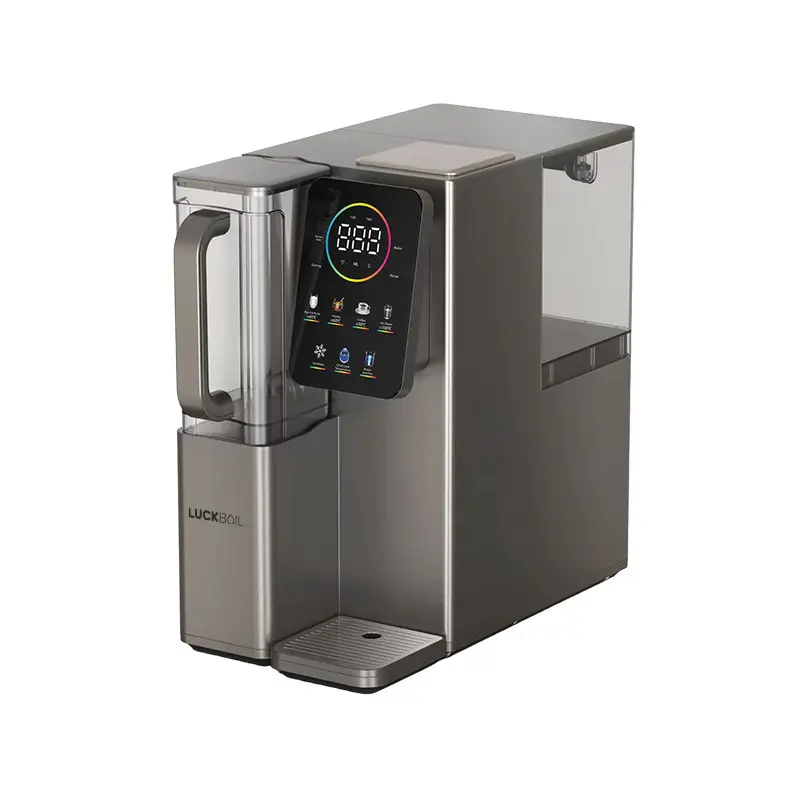
When you open your tap, you may think that water is clean, but it may have a lot more than just H2O. Reverse osmosis (RO) water cleaner is a fast speed filter, which is composed of a pump that pushes the water through a material that separates particles and chemicals that cannot be seen by the naked human eye. It also removes sediments like rust or sand which may be an accumulation of the old pipes, chlorine which may also cause taste and smell. The thick metals such as lead, mercury and arsenic are not absorbed by the RO membrane hence your drinking water is much safer. The dangerous chemicals sometimes found in the tap water including nitrates, fluoride (not always), and certain pesticides are also minimized by the RO systems. There are complications in the penetration of even tiny bacteria and viruses through the rigid RO membrane. Other systems make use of RO membrane as well as pre-filters and post-filters to separate all the larger debris up to the final odors and the final result is fresh and clear water. Most families also notice a significant shift after changing. Using tea as an example, parents often claim that tea, coffee, or even homemade baby food is more preferable, and children prefer plain water more. Cookers using RO Pre-filter Water Purifier say that less dirtiness and metallicness in the flavor of rice and soups have been detected. It is not just a matter of taste, but the benefit is also concerned with the reduction of exposure to chemicals that accumulate in the body with time. High-flow RO systems will provide such a level of protection without slowing the speed. They can be used to control the daily needs of the house hence you will not be concerned with the gradual filtration of water. In short, an RO purifier will not only supply your family clean water, but in real sense, purified water, which will give you that assurance with each glass.
The Difference Between Ultrafiltration and RO Reverse Osmosis Systems.
Ultrafiltration (UF) and reverse osmosis (RO) systems are terms that have been repeated many times when it comes to water purifiers. They both clean water, however, in different ways and remove different things. In ultrafiltration, the membrane has small holes that prevent bacteria, sediments and other large particles. It works well at eliminating visible impurities and germs, however, dissolved salts, heavy metals, and some chemicals are not filtered. So when your water source contains hard water or high levels of fluoride or metals such as lead, UF may not prove sufficient. RO systems, conversely, utilize a much finer membrane which puts pressure on water to flow through it. This filters almost all of the dissolved solids, heavy metals, fluoride and even a few bacteria and viruses. Basically, RO goes a notch higher than UF in water purification and hence it is applicable in places where hard water is observed or where there is an issue of contamination. Most of the contemporary purifiers incorporate both UF and RO stages with carbon filters to achieve a broad spectrum of impurities. The UF stage is usually preliminary, trapping sediments and larger particles and this is a way that the RO membrane has a long lifespan. The choice of the two water sources depends on your source of water. Provided that your water supply is of a municipal supply which has already been treated and that it contains little or no heavy metals, UF may suffice to be used in everyday life. However, when your water is hard, well-based, or has a record of being contaminated with metal, an RO system offers greater protection. There can be differences in tastes and safety that is easily observed among families. RO water is smoother, has a lower smell and chances of exposure to long term effects of metals and chemicals are decreased. Knowing the difference can assist you in choosing the appropriate system without paying excessively on the system because of the features that may be irrelevant to you, providing your house with clean water that would match your requirements.
Why Every Indonesian Home Needs an Under-sink RO Water Purifier to Combat High TDS.
Tap water can be contaminated with a lot of Total Dissolved Solids (TDS) in most areas of Indonesia but it may appear clean. TDS is used to measure all the minerals, salts, and small particles of water that are dissolved. Although not all minerals are harmful, the presence of high levels of TDS may give the water a metallic or bitter taste and in a long-term consumption may have some impact on health. An under-sink reverse osmosis (RO) water purifier comes in place here. It strains the water at its source thus minimizing TDS, providing you with water that is safer and tastier. Under sink RO systems are designed to be very small and convenient and will fit perfectly under your kitchen counter. They deliver clean water when required, hence you do not need to wait until water storage tanks get filled or until you buy bottled water. The system forces the water through various layers comprising of the pre-filters, RO membrane, and post filters and each layer filters sediments, chemicals, heavy metals and superfluous salts. This makes sure that what gets into your glass is clean, clear and free of the impurities that are not obvious as it has high TDS. The benefits to the families are simple to observe. Use of RO water enhances the taste of rice, soups and tea. Infants and small children consume less hard water that lacks the bitter taste of minerals. Even pets appear to like water which is fresher and cleaner. Appliances such as kettles and coffee machines can remain cleaner as homeowners will often notice that with high TDS it is less likely to accumulate scale and therefore, will be cleaner. Having an under-sink RO on the system is a sure way of calmness because of water safety becoming a daily issue. It is a modest investment and it will save your family against any invisible contaminant besides making the water you use daily more tasty and better. In Indonesia, TDS may fluctuate significantly, so it is a good and intelligent idea to have a reliable RO purifier in the house.
Filter Lifespan: When to Change Cartridges in Your Domestic RO Water Filter.
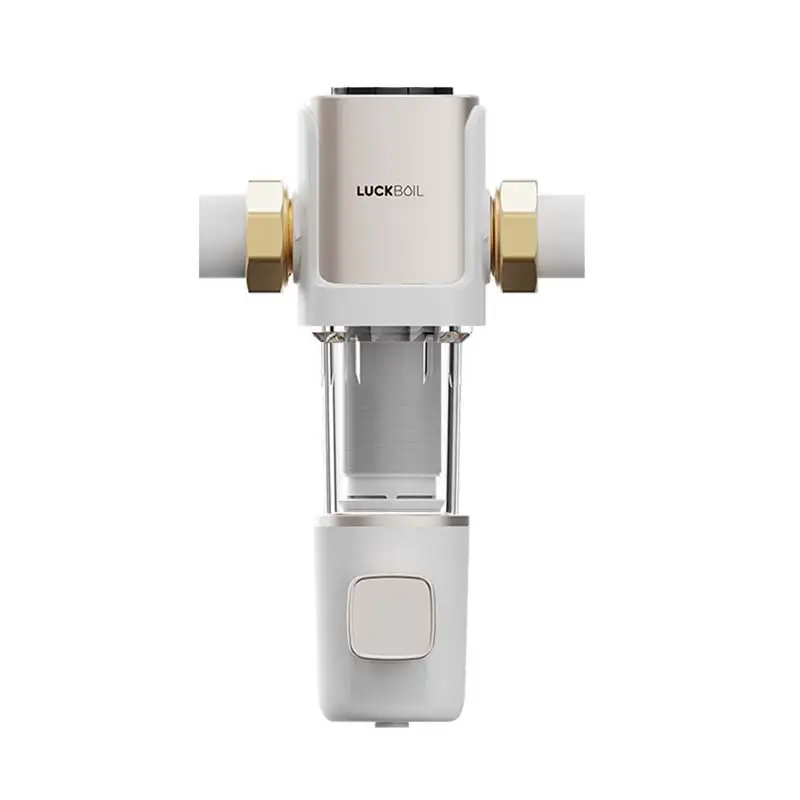
The best RO water purifier can work only provided its filters are replaced in time. Your domestic RO system contains a number of cartridges, which include pre-filters, the RO membrane, and post-filters. All of them are employed, and with time, they become congested or inefficient. The pre-filters, where sediments, chlorine and other large particles are caught, are normally replaced after every 6 to 12 months, depending on the quality of the water. The heart of the system is the RO membrane that has a life of 2 to 3 years though it can become shorter in case of very hard water or high TDS. Post-filters (usually carbon based to eliminate taste and odor) are usually replaced after 12 months. It is not difficult to notice when a filter should be changed. When the water begins to taste flat or metallic or slightly off, then it may indicate that the post-filter is worn out. The slow flow of water in the tap usually indicates the presence of clogged pre-filters or the non-durability of the RO membrane. Other RO systems have indicators installed, yet in the absence of either of these, a simple schedule is effective. Note down the date of installation of each cartridge and this will assist in tracking it. There is no complex replacement of cartridges. Majority of filters are easily twisted or slid in and an instruction is normally provided with the system. It is also necessary to use authentic replacement filters to prevent leakages and destruction. Leaving out the change can not just result in the change in taste, but also allow the contaminants to enter through the system, meaning it would be pointless to have an RO system in the first place. To families, keeping up with filters maintenance will mean no glasses of water will be contaminated. It is a little thing that ensures your RO system is operating at its best, the health of your family is not jeopardized and even that your appliance lives a little longer.
Combining Health and Heat: The Advantage of RO Water Purifiers with Heating Function.
A heating feature on an RO water purifier brings an added convenience that is easily observed by families. It can also give hot water immediately to make tea, coffee, cook, or prepare baby food beyond supplying pure water. This will save time and make sure that the water you are boiling to prepare hot beverages or meals is already clean and you need not boil it in a separate kettle. It is a convenient way to save time in the busy family, particularly in the mornings when time is of the essence. The purification process is not affected by the heating function. The first stage of it is a pre-filter, where the water is filtered and then passes through the RO membrane and post-filter, eliminating sediments, heavy metal, and other impurities. When it is completely purified the system heats it to the required temperature. This implies that all the hot water can be consumed and can be used at any time. There are even some models that allow you to change the temperature whereby you can keep the water warm enough to cook or even pipe-hot to serve drinks. Families observe a change in day to day activities. Preparation of tea or coffee is quicker as there is no need to wait until the water boils. The parents will be able to make the baby formula with peace of mind since they are sure that the water is clean and warm. Rice, soups, or ready-made meals are better to cook, and it is not as much of a risk of contamination as boiling tap water in another vessel. This feature helps to eliminate the additional appliances in offices or even in the shared kitchens to keep the countertops cleaner and more organized. The ability of purification and heating together in a single unit will conserve space, time, and energy besides providing peace of mind. To households that care about the safety of the water that they use, it will be a one-stop solution that will help them maintain healthy hydration and a convenient lifestyle. These systems offer an intelligent opportunity to simplify the family kitchen routines by providing the convenience of an immediate supply of hot water and the comprehensive nature of the RO filtration system, providing no shortcuts on quality.
Table of Contents
- What Does a High-Flow RO Water Purifier Actually Remove from Your Tap Water?
- The Difference Between Ultrafiltration and RO Reverse Osmosis Systems.
- Why Every Indonesian Home Needs an Under-sink RO Water Purifier to Combat High TDS.
- Filter Lifespan: When to Change Cartridges in Your Domestic RO Water Filter.
- Combining Health and Heat: The Advantage of RO Water Purifiers with Heating Function.

In the future, Luckboil Electrical Appliance will continue to uphold the business philosophy of "technological innovation, quality first", committed to providing healthier and more convenient living solutions for global consumers, and strive to become a leader in the water purifier & water dispenser fields.