EN
EN
 CN
CN EN
EN AR
AR BG
BG HR
HR CS
CS DA
DA NL
NL FI
FI FR
FR DE
DE EL
EL HI
HI IT
IT JA
JA KO
KO NO
NO PL
PL PT
PT RO
RO RU
RU ES
ES SV
SV IW
IW ID
ID LV
LV LT
LT SR
SR SK
SK SL
SL UK
UK VI
VI ET
ET HU
HU TH
TH TR
TR FA
FA MS
MS BE
BE HY
HY AZ
AZ EU
EU KA
KA MN
MN MY
MY KK
KK TG
TG

Choosing the right water system for your kitchen can change how you use your kitchen daily. Smart faucets include touch or sensor faucets. Some of these will come smart ready. Others prefer a freestanding device that installs on the wall and leaves your sink area open. They include pull-down Water Dispensers that install in cabinets and can dispense hot, cold, or filtered water whenever you need it. Each option serves great purposes depending on how you cook, clean, and use water around your house. If you have ever leaned over your sink with a pot in one hand, a glass in the other and a messy sink area you will understand why this choice matters.

Feature comparison – sparkling, hydrogen water, coffee, ice cubes, multi‑temperature
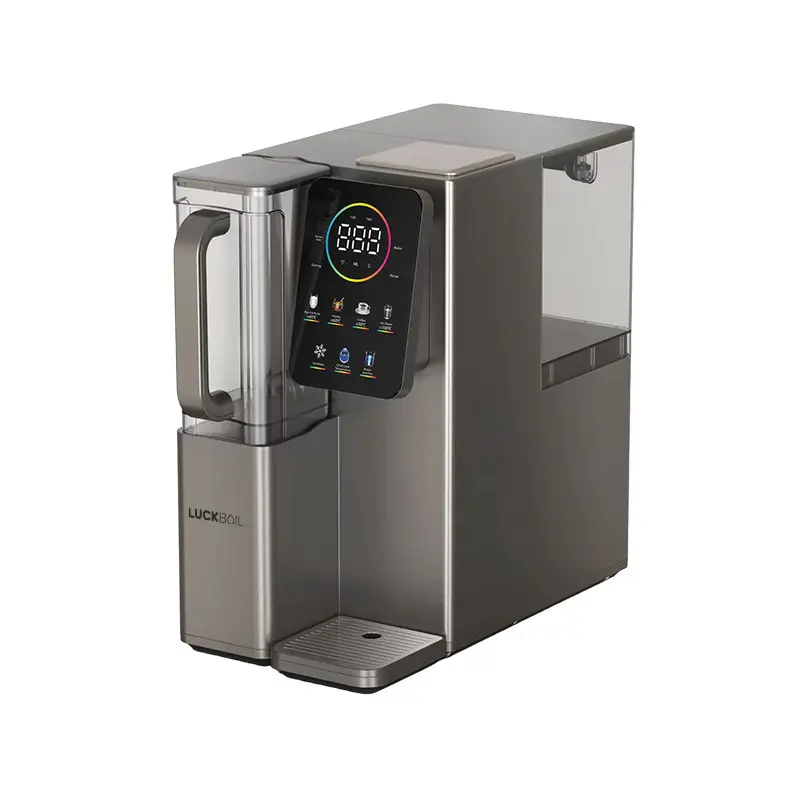
The biggest jump between the three comes with features and what they can really offer you beyond plain old tap water. A smart faucet is going to focus mainly on convenience. Most offer filtered water with basic options to control hot or cold water. Some even allow you to preset a few temperatures if you like to make tea or mix up baby formula. However, once you get into extras like sparkling water, hydrogen water, coffee or ice, the smart faucet will begin to fall short. It becomes less of a complete drink station and more about clean water at the twist of a knob. When you add features to a wall-mounted unit you have room to grow. Since it isn't stored in the counter space you can have more powerful filters and a variety of drinks. Many units come with dual temperatures allowing them to be used every day by your family, especially in busy kitchens. You can even find units that offer built in devices to make hydrogen rich water. This is something many families will take while drinking throughout the day. Sparkling water is not as popular but is slowly being integrated into newer models. You will rarely find coffee or ice here but you have more options than what you can from a faucet. Let's say you have a small kitchen in your apartment where you don't have a large area for a sink. A wall-mounted could offer you more functionality without taking away from counter space. Counter top mounted dispensers can also be built-in units. Place these under your counter or in a cabinet to allow you to have multiple systems installed into one space. There can be sparkling water, dual temperature control and even hydrogen water all in one machine. Others connect to a coffee machine so you can grab hot water to brew with or even dispense coffee directly into your cup. Some of the higher end models will even ice. These are great for families that enjoy cold drinks often. The drink station taking up space in your counter means you won't have to worry about drinks covering the counters. A popular place you will see these is in a modern kitchen that is open concept. They want to keep the counters clear but enjoy drinking coffee shop style drinks at home.

Price & long‑term cost comparison (unit + filters + electricity + maintenance)
Taking the time to shop around and compare prices will help you look beyond just the price tag on the shelf. Every option has four basic costs: the unit, filter replacement costs, electricity consumption, and maintenance. Smart faucets are typically the cheapest option to start. The unit and basic installation will run you around the average household. If you purchase ones with app control or temperature settings you will spend more but will still be cheaper than full dispensers. The real cost while using it will be filter replacement. Most families need to replace these once or twice a year which could be a small annual fee. Electricity use is low because not all faucets have the cooling/heating running at all times. Maintenance on faucets is also not very intense and needs consist of wiping down the sensor area and occasionally changing filters. Imagine a small kitchen in a condo and you have one person who simply wants cleaner water to drink and quicker access to hot water for coffee. Families will put a wall-mounted dispenser in the middle of the kitchen to make it more convenient. Unit price is higher on its own and you may need to pay your contractor a little extra to install it since it uses your plumbing and sometimes electrical lines. Filtering usually has to be more thorough with the connection to the water lines so you may spend slightly more on filters than the faucet. Electricity use is higher as it can continuously heat or cool water for you. It's a popular choice for families because it can replace kettles and bottle water purchases. If you or someone in your house drinks 3 cups of tea, 2 bottles of milk and 5 bottles of water a day then this option is great for you and your actual household. Built in dispensers are the most expensive upfront and down the road. Installation plus the unit and cabinet can really put a dent in your wallet. Some have more complex refrigeration features such as sparkling or hydrogen which is another factor to electricity usage. Filters are also priced higher and you will find yourself changing them more. Service checks are another form of maintenance you will have to account for if there are problems with the inner workings of the cabinet. You'll find these in modern kitchens where people want a clean countertop and full drink station at home but with the highest cost commitment.
Installation complexity – choices for rentals, new homes, and old kitchens
The home you live in really plays into how complex the installation will be. The biggest variables are how much plumbing needs to be done and if you have the space/placement to do it. Installing a smart faucet is easiest in most cases. It should fit into the existing hole your old kitchen faucet came out of. If not, any regular kitchen faucet will work. It usually just needs basic hook ups under the sink and sometimes a small battery pack or plug to the sensor. This would be ideal for renters as most of the time you can simply reverse the process when you move out. No cutting into walls or replacing cabinets. An example would be you renting an apartment and wanting to replace your current faucet with something better to wash laundry buckets with but don't want to deal with hooking up to the plumbing. Wall mount takes it up a notch. You need piping inside the wall so this is best suited for new construction or full kitchen renovations. The plumber will need to make sure you have proper spacing and height of the pipes before the wall goes up. Some demolition on older kitchens will need to occur. Wearing out increases time and cost. Since there is a lot of permanence with this installation, rentals are usually not ideal. Many people will remodel their kitchen and decide to paint the kitchen anyways, so why not install the faucet? Built in dispensers are the hardest for us to install. They typically need room inside of an under sink cabinet. They require a dedicated water line. Some even need an electrical outlet near the sink to heat or cool water. Some systems even need drainage lines plumbed in to filter water through. New houses or planned kitchen renovations are ideal for these type of installations. Some older kitchens might need cut outs in counter tops or reconfiguring of cabinet space to allow for the install. Again rentals usually do not work unless your landlord allows for permanent changes. If you're wondering about smart faucet rentals and quick upgrades: go with a wall mount if your building or renovating. If you're doing a full kitchen remodel: go with everything. Its all being planned out for you.
Family scenarios – families with babies, seniors, coffee lovers, or fitness enthusiasts
The best water system, when you consider families, is really based on daily practices. The existence of a baby in the house, an old parent, a coffee routine or a fitness lifestyle turns the most important things into a change. In the case of babies, safety and constant temperature are the priority of the family. Parents always require hot water to prepare milk at odd times, and multi-temperature would be a great advantage. The type of dispenser can be a built-in dispenser or a wall-mounted unit with a constant supply of hot water since it eliminates any guesswork. The trick is to have it ready in a jiffy without boiling the kettle on the burner or letting a kettle cool off. An actual case is a night feeding schedule whereby a single button administers the right warm water to formula, which makes things less hectic. In the case of elder people, simplicity is more important than functionality. Large buttons, readability, and accessibility are significant. A smart faucet can fit well when it has a hot and cold control that is not too complex with a number of settings. Wall-mounted ones are also effective as long as they are mounted at a convenient height. The primary aim is to prevent bulky lifting or intricate procedures, particularly with hot water. Coffee consumers tend to be concerned with consistency. The temperature of water can vary greatly with taste and thus multi temperature control is handy. Certain inbuilt systems provide almost-boiling water on tap, which is excellent in making pour-over or instant coffee. In real life, most home coffee drinkers prefer to have hot water prepared without the need to wait to use a kettle in the mornings before going to work. Families that are fitness conscious tend to consume more water during the day. In this case, cold and filtered water is of high priority and in some cases, hydrogen or mineral-rich water may be required. No problem with access promotes hydration behavior. A built in or mounted system onto a wall close to the kitchen or even a small drink station would help in refilling bottles after exercising in a short period of time. In short, all arrangements can suit any of the kinds of families, but the most suitable one is the one that fits your most frequent issue: taking care of a baby, providing seniors with convenience, drinking a cup of coffee every day, or staying hydrated.
2026 trends – smart controls, water quality monitoring, and app integration
Smart water systems in 2026 are not merely about offering hot or cold water anymore. They are joining an interconnected kitchen monitoring usage, water quality, and connecting to your phone. Smart control via apps is the largest trend. It is now possible to regulate the temperature, lock the dispenser when your children are away, or to create routines such as morning coffee or workout refill directly on your phone. This helps to make everyday usage more intimate and less mechanical. The other significant change is the monitoring of water quality. New systems are monitoring such aspects as TDS levels, filter life, and flow rate in real time. The system notifies about the need to replace filters or displays clear values in an application instead of guessing the appropriate time. Others even increase or decrease the filtration strength according to the variability of water quality. This makes families more assured about their consumption of water particularly where direct water lines or multi-stage filtration systems are used in the homes. Smart controls are also getting more accurate. New smart faucets and wall-mounted units now have touchless sensors, voice commands, and temperature memorizing settings. Something as basic as a voice command to warm water to make milk or cold water to have a post-exercise shower is becoming a norm in a number of households. This comes in particularly handy when the morning is busy and hands are full or time is of the essence. In-built dispensers are pioneering in the application of apps. They can be easily linked to Wi-Fi and display consumption statistics such as daily water consumption or filter life. Certain systems actually propose maintenance of equipment according to actual use rather than on a predetermined schedule. This simplifies and reduces the stress of long-term maintenance. A good example is a modern kitchen in a family where mom and dad are monitoring their hydration status to stay fit, making baby formula at night and still demand cold sparkling water at dinner. There is no need to have distinct devices since a single smart system is in charge of all of it via an app and easy controls.
Table of Contents
- Feature comparison – sparkling, hydrogen water, coffee, ice cubes, multi‑temperature
- Price & long‑term cost comparison (unit + filters + electricity + maintenance)
- Installation complexity – choices for rentals, new homes, and old kitchens
- Family scenarios – families with babies, seniors, coffee lovers, or fitness enthusiasts
- 2026 trends – smart controls, water quality monitoring, and app integration

In the future, Luckboil Electrical Appliance will continue to uphold the business philosophy of "technological innovation, quality first", committed to providing healthier and more convenient living solutions for global consumers, and strive to become a leader in the water purifier & water dispenser fields.